
By Yelena Moskovich
A Jewish Ukrainian-American woman spends the longest, coldest night of the year in bed with her Russian girlfriend, Nadezhda, in their Berlin apartment. There, against the backdrop of the antisemitic violence that forced her family to flee to the US when she was a child and of the new Russian war on Ukraine, she reflects on her life, her identities and her histories.
This novel in verse is a history of the two women’s relationships, but it is at the same time a record of Slavic culture, an archive of Eastern European queer lives, a call to other exiles and an ode to neurodivergent people. As we follow the narrator’s stream of consciousness, we jump from Ukrainian folk tales to Chekhov short stories to Russian techno pop from the 1990s.
Through Nadezhda’s life story and the narrator’s own search for belonging, their love story inextricably connected to their national history, a cartography emerges, from Romania to Germany to Ukraine to Russia, of clubs, of individual trajectories of migration, of poems that still echo today, of people who stayed and those who left.
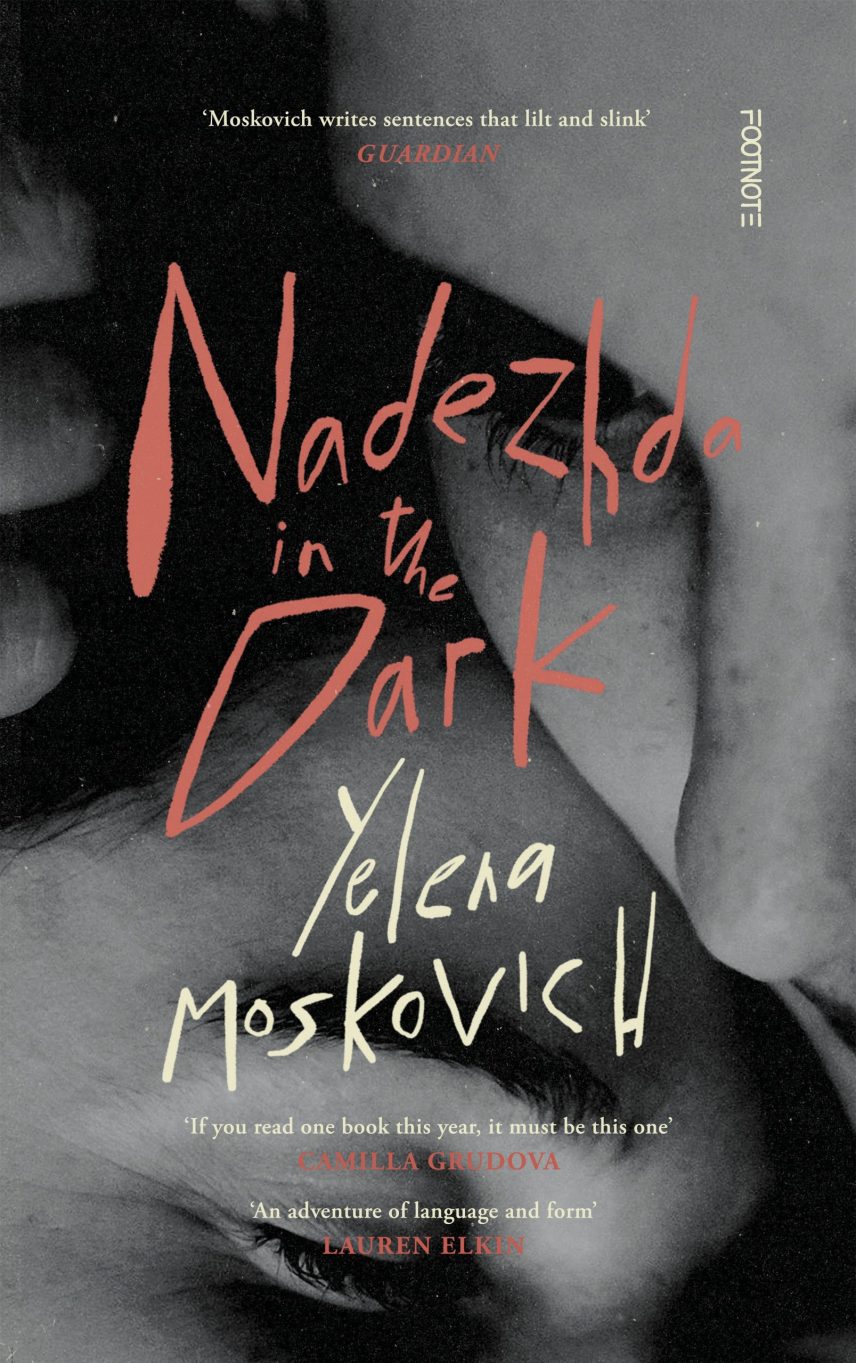
Both the cover and this idea of two bodies intertwined in the darkness against a background of violence war made me think of the opening scene of the 1959 film Hiroshima mon Amour (directed by Alain Resnais and written by Marguerite Duras).
While the multilingual verse (including Russian, Yiddish, German and French as well as English) and the questions around migration, belonging and identity naturally appealed to me, this was also an exercise in decentering my Western European point of view. I learned a lot about Eastern European Jewish history as well as queer culture in Russia and Ukraine. A wonderful discovery!
Review by Leti